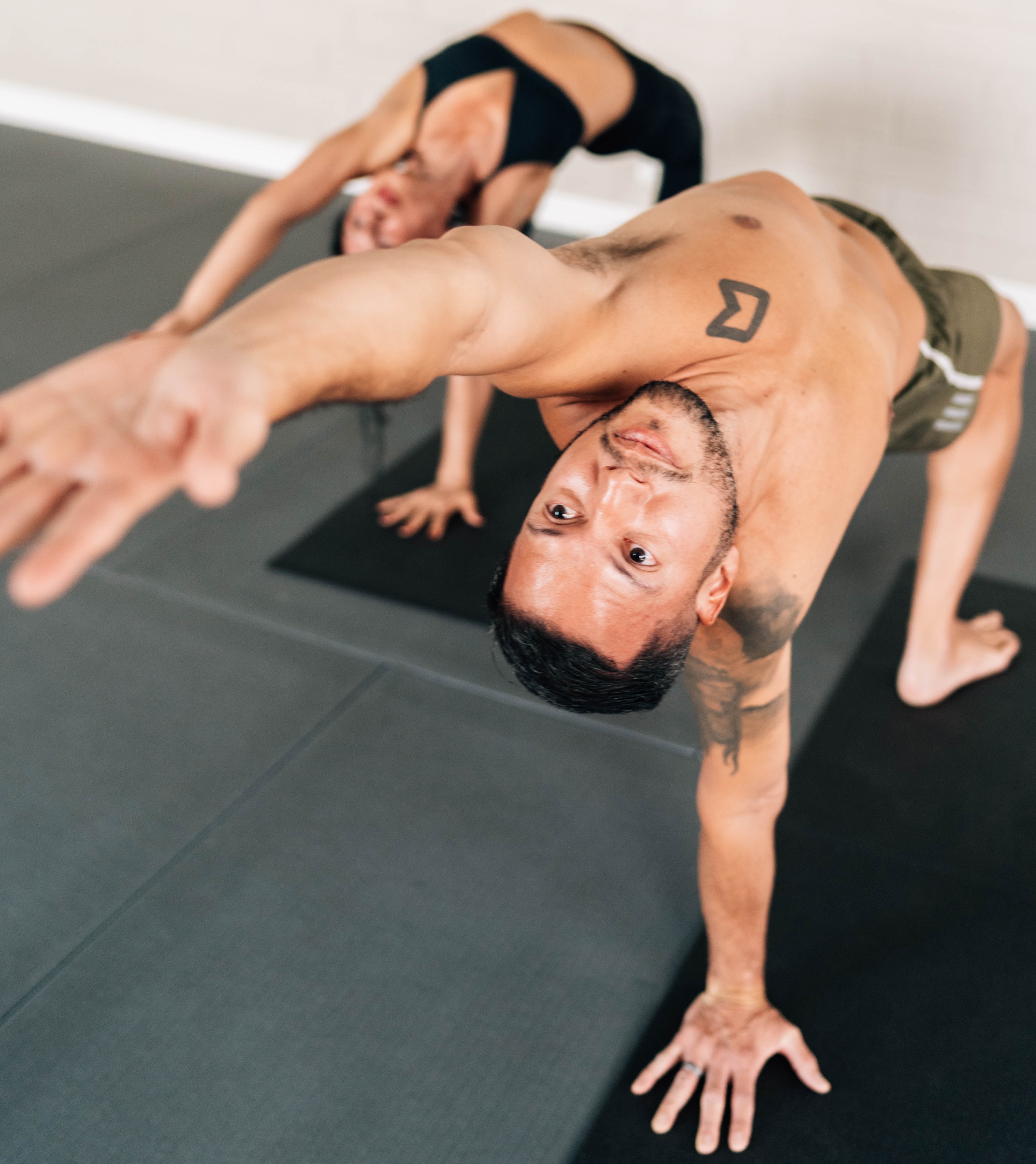
Flipped Dog is an expressive, heart-opening posture that invites us to explore freedom, playfulness, and trust. We move into this pose from Downward Facing Dog in many of our hot and vinyasa classes, using it as a way to open the front body, build strength, and reconnect with a sense of joy in our practice.
Fundamentals of the pose
Flipped Dog helps us strengthen the shoulders, arms, and upper back while opening the chest, hip flexors, and the whole front line of the body. As we expand into the shape, we feel a gentle lift through the heart and a grounding stability through the supporting hand and foot. The pose encourages us to breathe deeply, soften tension, and embrace a sense of spaciousness — both physically and emotionally. It’s a posture that reminds us to lean into trust and to stay open, even when we step into the unknown.
How to practise it
From Downward Facing Dog, we begin by bending one knee and opening the hip, allowing the lifted leg to gently rotate outward. As the body naturally turns, we step the lifted foot softly behind us, rotating onto the outer edge of the opposite foot. We press firmly into the supporting hand while lifting the hips and reaching the free arm overhead, letting it drape or arc in a way that feels expansive. Throughout the pose, we keep the breath smooth and steady, allowing the back body to support us as the front body opens. If it feels too strong, we can pause in Side Plank or Three-Legged Dog instead.
Why it matters
Flipped Dog encourages us to blend strength with surrender. As we press into the earth and lift through the heart, we discover the balance between grounding and openness. It’s a pose that invites play, curiosity, and a willingness to let the body move with freedom. And often, when we come back down to the mat, we feel more confident, more spacious, and more connected to ourselves.