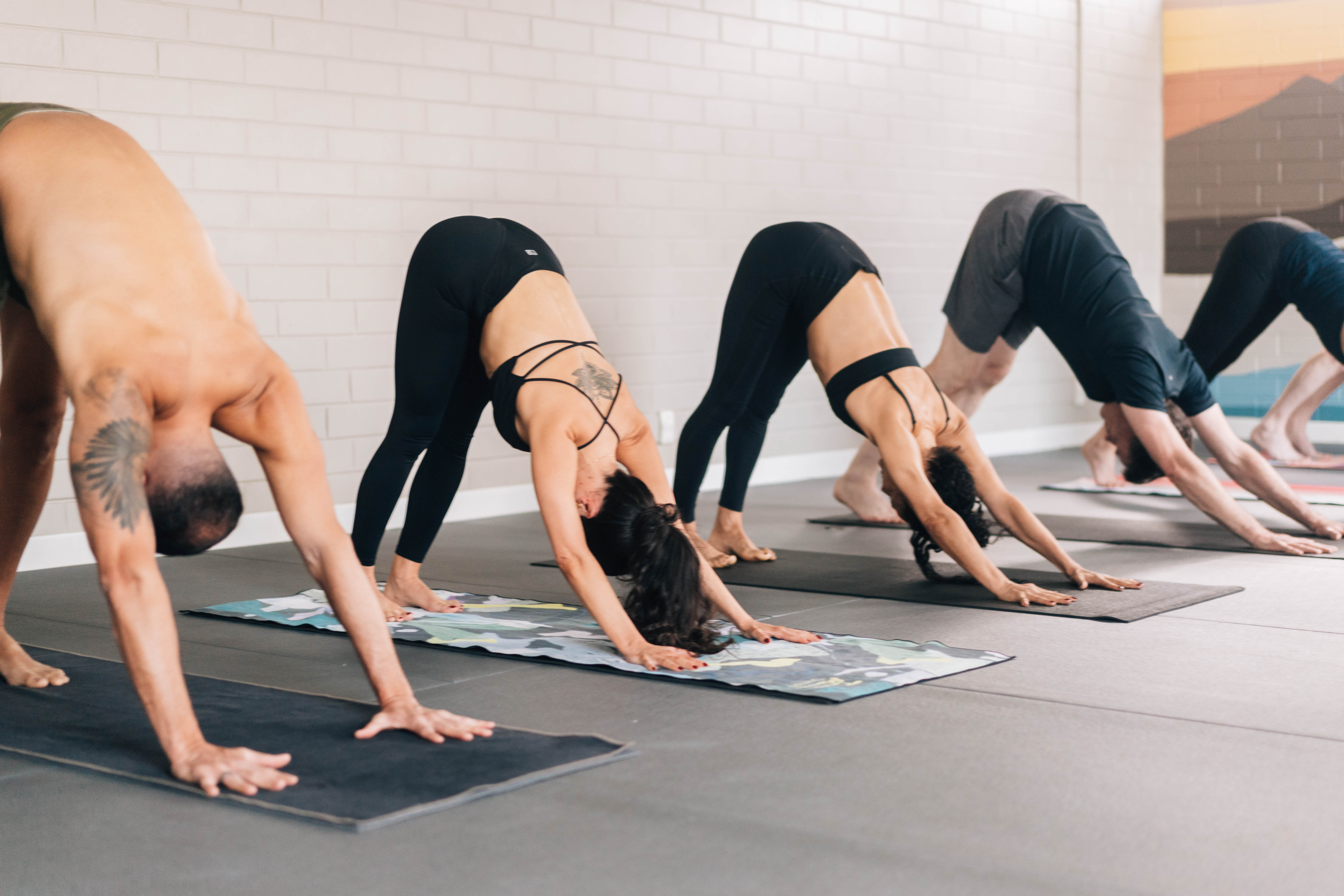
Downward Facing Dog, or Adho Mukha Svanasana, is one of the most familiar poses in yoga — a steady, energising shape that helps us feel both grounded and uplifted. We meet this pose often in our hot and vinyasa classes because it builds strength, lengthens the entire body, and creates a calming rhythm in our breath.
Fundamentals of the pose
Downward Facing Dog helps us strengthen our arms, shoulders, and upper back while lengthening the hamstrings, calves, and spine. As we settle into the pose, we feel how it creates space through the sides of the body and ease through the back. Because the head is gently lowered below the heart, the pose also has a soothing, steadying effect on the nervous system, helping us focus, reset, and soften mental tension.
How to practise it
We begin on hands and knees, spreading the fingers wide and pressing evenly through the palms. As we lift the hips, we gently straighten the legs — or keep a soft bend if the hamstrings feel tight. We reach the sit bones up and back, letting the spine lengthen naturally as the heels move toward (but don’t need to reach) the floor. We allow the neck to soften, the shoulders to broaden, and the breath to stay smooth and steady. If the pose feels intense, we can bend the knees or take a moment in Child’s Pose before returning.
Why it matters
Downward Facing Dog reminds us that effort and ease can flow together. As we ground through the hands and feet while lifting through the hips, we experience a sense of balance, stability, and openness. It’s a pose that helps us reconnect with our breath, reset our energy, and find clarity — both on the mat and in the moments that follow.